









Automatic pool cleaners have transformed how pool owners maintain their water.
Instead of spending hours with a manual vacuum, these devices handle the work with minimal effort.
However, choosing the right type requires understanding the robotic vs suction vs pressure pool cleaner.
Each operates on a distinct principle and suits different pool conditions, debris loads, and budgets.
How Each Type of Pool Cleaner Works
Suction-Side Cleaners
Suction-side cleaners connect to your pool’s skimmer or a dedicated suction port.
They rely on the pool pump’s suction to move across the floor and walls, drawing water and debris into the main filtration system. Because they use existing equipment, installation is straightforward.
These cleaners are most effective at picking up fine dirt, sand, and light debris.
Larger items like leaves or twigs can clog the system, requiring manual removal before use.
Pressure-Side Cleaners
Pressure-side cleaners attach to the return jets of your pool’s circulation system.
Instead of suction, they use water pressure — often boosted by a separate pump — to propel themselves.
Debris is collected in an attached bag, keeping it out of the pool filter.
This design makes pressure cleaners excellent for handling larger debris such as leaves, acorns, and twigs.
They move quickly and cover the floor efficiently, though they may miss very fine particles.
Robotic Cleaners
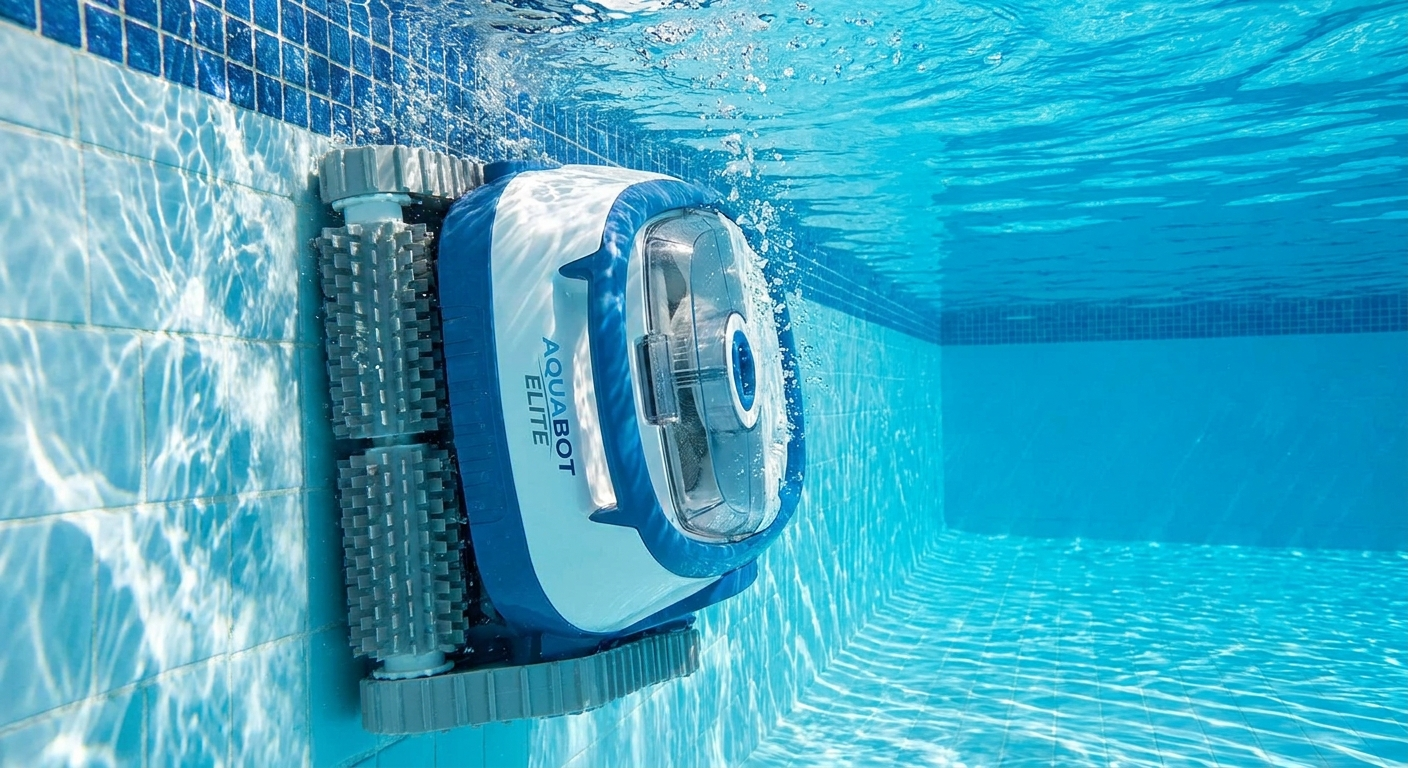
Robotic cleaners are self-contained units that operate independently of the pool’s pump and filter.
They plug into a standard electrical outlet and use built-in motors, brushes, and filtration systems to scrub floors, walls, and even the waterline.
Advanced models feature smart navigation, programmable schedules, and app control.
Robotic cleaners capture everything from fine silt to large leaves, delivering the most thorough clean without taxing the pool’s main equipment.
Pros and Cons of Each Type
Suction-Side Cleaners
Pros:
- Most affordable upfront cost.
- Easy installation with no extra equipment.
- Good for fine debris like sand and dust.
- Simple maintenance with few moving parts.
Cons:
- Struggles with large debris; can clog.
- Adds wear and tear on the pool pump and filter.
- Limited to floor cleaning; few models climb walls.
- No smart features; cleaning pattern is random.
Pressure-Side Cleaners
Pros:
- Handles large leaves and heavy debris effectively.
- Keeps debris out of the main filter, reducing strain.
- Fast cleaning with strong propulsion.
- Durable and long-lasting with proper care.
Cons:
- Often requires a booster pump, increasing energy use.
- More complex installation and maintenance.
- Less effective on fine particles like silt.
- Debris bag needs regular emptying.
Robotic Cleaners
Pros:
- Superior cleaning on all surfaces, including walls and waterline.
- Energy-efficient — uses about as much power as a light bulb.
- Independent operation reduces strain on pool equipment.
- Smart features enable scheduling and remote control.
Cons:
- Highest upfront cost.
- Requires manual emptying of onboard filter basket.
- Some models are heavy to lift from the pool.
- May not handle irregular steps or ledges perfectly.
Choosing the Right Cleaner for Your Pool
The ideal cleaner depends on your pool’s size, debris type, and your maintenance preferences.
For budget-conscious owners with small pools and light debris, a suction-side model provides reliable service at a low price.
Pools surrounded by trees that collect leaves and twigs benefit from a pressure-side cleaner, especially if you already have a booster pump or are willing to install one.
If you prioritize convenience and performance, a robotic cleaner is a worthwhile investment. It cleans thoroughly without adding load to your circulation system. Many models also include programmable cycles, so you can set them to run daily and retrieve a spotless pool.
Key Factors to Consider
Debris Type: Fine dirt and sand suit suction cleaners. Leaves and twigs are best handled by pressure units. Robotic cleaners excel at both fine and coarse debris.
Pool Size: Suction cleaners work well for small to medium pools. Pressure and robotic cleaners can cover larger areas more quickly.
Energy Use: Suction cleaners use existing pump power but increase its runtime. Pressure cleaners may require a booster pump. Robotic cleaners are the most energy-efficient, using low-voltage electricity.
Maintenance: Suction models require frequent filter cleaning. Pressure models need bag emptying and hose checks. Robotic cleaners need periodic filter and brush cleaning but are otherwise low-touch.
Installation and Compatibility
Suction and pressure cleaners integrate with the existing plumbing, which means you need compatible fittings and adequate pump flow.
Robotic cleaners require only a nearby power outlet and are compatible with most in-ground pools.
Above-ground pool owners should check model specifications, as many robotic cleaners are designed for in-ground use.
Suction and pressure models often offer versions for both pool types.