









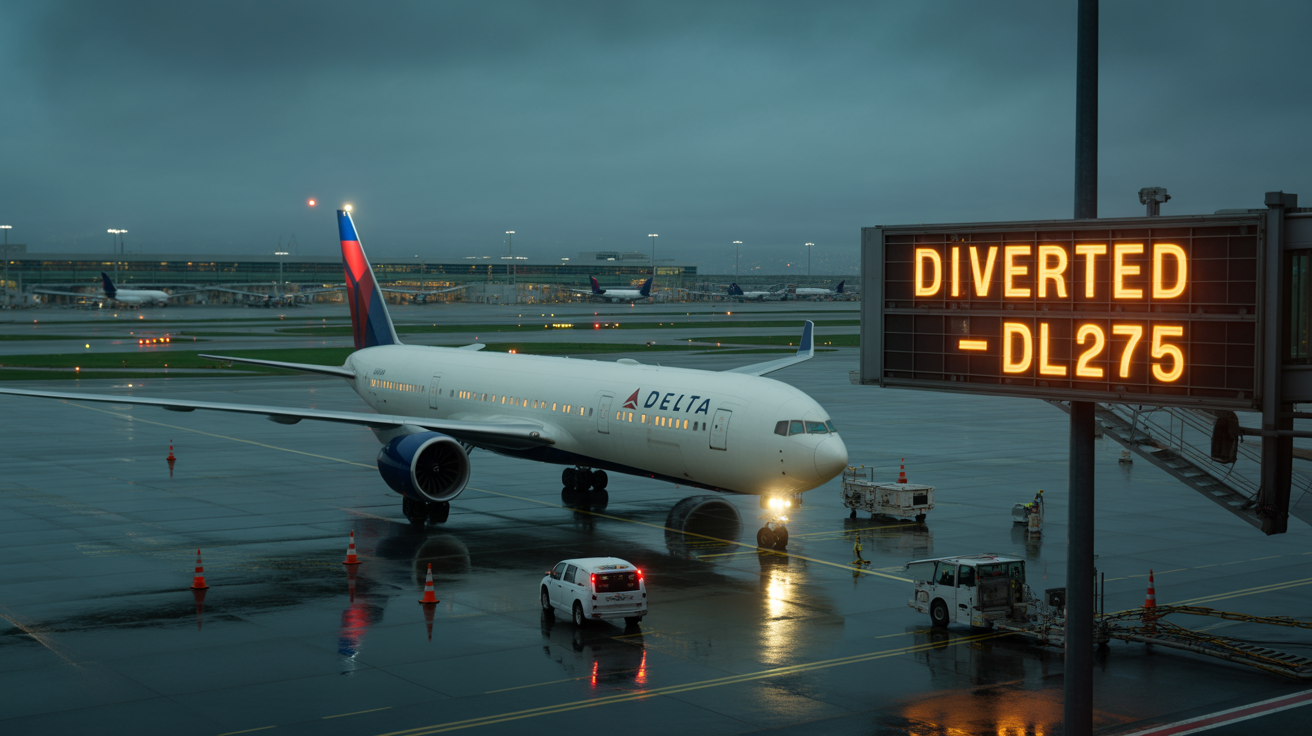
When you settle into your seat for a long-haul flight, the last thing you expect is to land thousands of miles away from your intended destination. That exact scenario unfolded when a high-profile delta flight dl275 diverted lax, catching the attention of aviation trackers and travelers worldwide.
Operating as a routine journey from Detroit Metropolitan Wayne County Airport (DTW) to Tokyo Haneda Airport (HND), the wide-body aircraft had to radically alter its flight path. Below, we break down everything you need to know about the incident, from the root causes behind the cockpit decision to how the situation was managed on the ground.
The Incident: Why Did Delta Flight DL275 Divert?
Midway through a transpacific crossing, smooth cruising can turn into a critical problem in a matter of seconds. For delta flight dl275 diverted to lax, the primary catalyst was a technical malfunction involving the aircraft’s engine anti-ice system.
Cruising at 38,000 feet roughly 620 nautical miles southwest of Anchorage, Alaska, the flight crew detected an anomaly in one of the Rolls-Royce Trent XWB engines.
- The Core Problem:The anti-ice system failed to properly route heated bleed air.
- The Risk:In freezing high-altitude corridors, progressive engine icing can cause severe thrust loss.
- The Decision:Rather than pushing forward into deep Pacific airspace or turning back into severe headwinds, the crew initiated an emergency diversion.
Why Los Angeles International (LAX) Was Chosen
When an emergency happens over the North Pacific, choosing an alternate airport is a high-stakes calculation. The crew of the delta flight japan diversion lax route had several choices, but LAX stood out for very specific operational reasons:
- Hub Infrastructure:LAX is a major operational hub for Delta Air Lines, meaning ground support is readily available.
- Specialized Maintenance:The airport features certified maintenance facilities and 24/7 technical support specifically equipped for Airbus A350 airframes and Rolls-Royce engines.
- Runway Length and Safety:Long-haul flights carry massive fuel loads, requiring long runways and comprehensive emergency services for a heavy landing.
After flying for roughly five hours following the initial turn-around, the aircraft touched down safely on Runway 06R at LAX without any reported injuries to passengers or crew.
Tracking the Aftermath and Flight Status
For individuals monitoring the delta flight dl275 diverted lax status, the sudden operational shift triggered immediate logistical updates:
- Passenger Reaccommodation:Affected travelers were immediately assisted by Delta’s ground teams and rebooked on alternative routes to Tokyo.
- Aircraft Grounding:The Airbus A350 remained grounded in Los Angeles for thorough inspections and component replacements before returning to service.
- Real-Time Data Updates: Live trackers and airline applications updated passengers on connecting itineraries to minimize further travel disruption.
Frequently Asked Questions (FAQs)
What caused delta flight dl275 diverted lax?
The flight was forced to divert due to a technical malfunction in the anti-ice system of one of its Rolls-Royce engines while cruising over the North Pacific.
Where was DL275 originally flying?
The flight was operating from Detroit (DTW) to Tokyo Haneda (HND) before it turned around toward the West Coast.
Were there any injuries during the emergency landing?
No. Thanks to the quick thinking and professional execution of the flight crew, the aircraft landed safely at LAX with zero injuries reported among the passengers or crew.
How long was the aircraft grounded at LAX?
The aircraft stayed on the ground in Los Angeles for roughly 18.5 hours while maintenance specialists inspected and serviced the affected engine system.
Conclusion
The unexpected journey of delta flight dl275 diverted lax serves as a stark reminder of the unpredictable nature of global aviation. While mechanical glitches and diversions cause temporary travel headaches, they also highlight the rigorous safety protocols, crew expertise, and robust infrastructure backing modern commercial flight.
Have you ever experienced an unexpected flight diversion while traveling internationally, and how did the airline handle your rebooking process?