








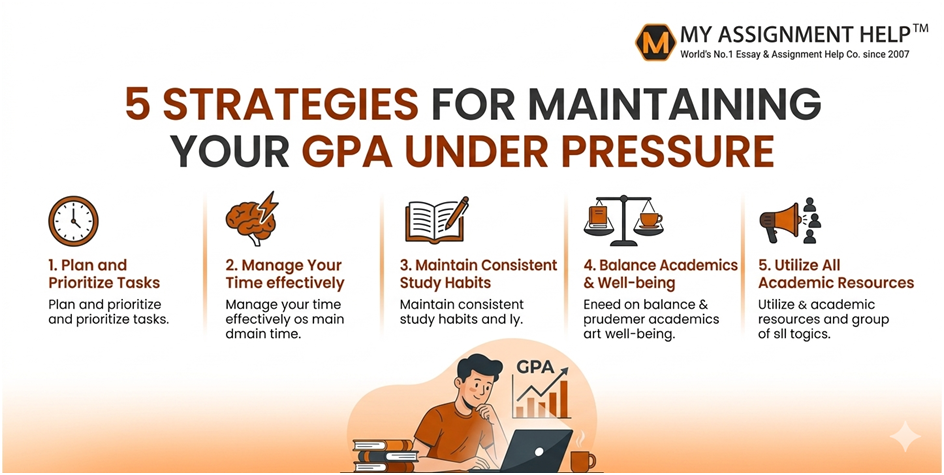
The transition into high-stakes higher education often feels like moving from a calm pond into a turbulent ocean. According to the American Psychological Association, nearly 60% of college students report experiencing “overwhelming anxiety,” with academic performance being a primary stressor. Maintaining a high Grade Point Average (GPA) is not merely about intelligence; it is about the strategic management of cognitive load and psychological resilience.
When the mid-semester crunch hits, many students default to “panic-studying”—long, caffeine-fueled nights that actually degrade memory retention. To sustain excellence without burning out, one must move away from brute-force labor toward data-backed academic systems.
In many cases, managing a heavy course load requires knowing when to delegate specific tasks. If you find yourself buried under specialized requirements, you might choose to Buy College Essay services to bridge the gap while you focus on high-priority exams. This strategic delegation is a hallmark of successful professionals and top-tier students alike.
1. The Power of “Leveled” Time Blocking
Standard “to-do lists” are often the enemy of a high GPA because they don’t account for energy fluctuations. Instead, elite students use Leveled Time Blocking. This involves categorizing tasks by “Cognitive Intensity”:
- Level 1 (Deep Work): Critical analysis, thesis drafting, or complex problem sets. These are scheduled during your peak alertness hours (usually 8 AM – 11 AM).
- Level 2 (Shallow Work): Formatting citations, organizing folders, or responding to emails.
- Level 3 (Review): Re-reading notes or self-testing.
By aligning the difficulty of the task with your biological clock, you prevent “decision fatigue,” a state that leads to 80% of academic procrastination.
2. Implement the “Feynman Technique” for Active Mastery
Research from the Journal of Educational Psychology suggests that “active recall” is significantly more effective than “passive review.” The Feynman Technique involves explaining a complex concept in simple terms as if teaching a child.
If you cannot explain a concept simply, you don’t understand it well enough for an ‘A’ grade. To maintain your GPA under pressure, spend 20% of your time reading and 80% of your time “outputting”—either through practice tests or verbal explanations. This moves information from short-term to long-term memory, ensuring that stress during an exam won’t cause a “mental block.”
3. Strategic Academic Outsourcing
There is a common misconception that high-achieving students do everything themselves. In reality, maintaining a 4.0 often involves identifying which tasks provide the most “ROI” (Return on Investment). If a minor elective assignment is consuming 20 hours of your week—hours that should be spent on your major’s capstone project—it is logically sound to seek professional assistance.
Many students hire someone to do my assignment when they are balancing internships, part-time work, or multiple heavy-unit courses. This allows for a more balanced mental state, which is essential for maintaining high performance in core subjects.
4. The 24-Hour Review Rule
Ebbinghaus’s “Forgetting Curve” shows that humans lose approximately 70% of new information within 24 hours if it isn’t reviewed. Under pressure, students often “collect” notes but never “process” them.
To combat this, spend exactly 10 minutes at the end of every day reviewing the notes taken that day. This simple habit keeps the neural pathways fresh, making your final “cram” sessions unnecessary because the information is already baked into your long-term memory.
5. Cognitive Reframing and Sleep Hygiene
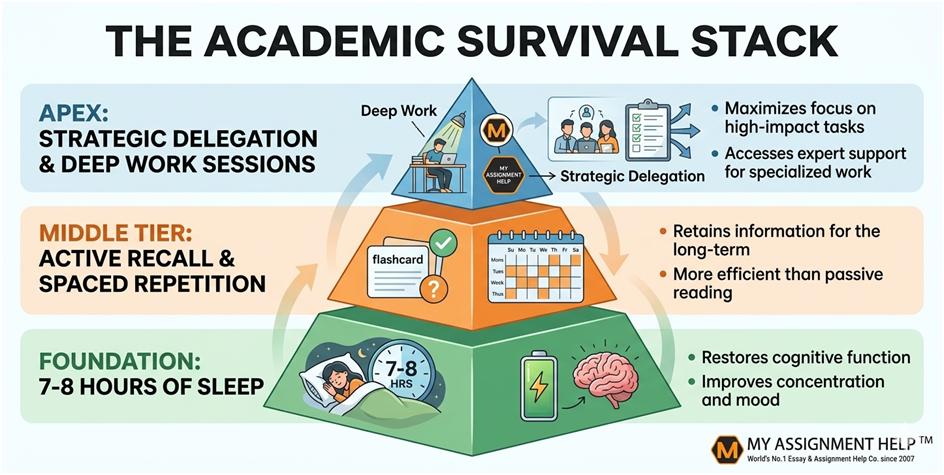
A study by the National Institutes of Health (NIH) linked consistent sleep patterns to higher GPAs. Sleep is when the brain flushes out metabolic waste and solidifies “memory traces.”
Furthermore, practice Cognitive Reframing. Instead of viewing a 15-page research paper as a “threat,” view it as a “skill-building challenge.” Students who view stress as a “performance enhancer” (Arousal Reappraisal) consistently outperform those who view stress as a “hindrance.”
Key Takeaways
- Audit Your Energy: Match your hardest tasks to your most energetic hours.
- Teach to Learn: Use the Feynman Technique to ensure deep conceptual understanding.
- Delegate Wisely: Don’t be afraid to use academic support services for non-core tasks to save your mental health.
- Beat the Curve: Review new material within 24 hours to halt the forgetting process.
- Prioritize Sleep: Treat sleep as a mandatory study tool, not a luxury.
FAQ Section
Q: How can I improve my GPA in just one semester?
A: Focus on “High Impact” tasks. Prioritize assignments that account for 20% or more of your grade and use active recall daily rather than cramming once a week.
Q: Is it “cheating” to use academic support services?
A: Think of it as tutoring or a “model paper” service. Using a professional draft to understand the structure, tone, and formatting of a complex assignment is a legitimate way to learn and manage time.
Q: Does pulling all-nighters actually work?
A: Rarely. While you might remember enough to pass, your cognitive function the next day is equivalent to being legally intoxicated, which severely hurts your performance on complex exam questions.
Author Bio
James Sterling is a Senior Academic Consultant at MyAssignmentHelp. With over a decade of experience in SEO-driven content strategy and educational psychology, James helps students navigate the complexities of higher education. He specializes in E-E-A-T compliant academic writing and developing productivity frameworks for international students in the US, UK, and Australia.
References & Data Sources
- American Psychological Association (APA) – Student Stress Survey 2024.
- Journal of Educational Psychology – Meta-analysis on Active Recall vs. Passive Reading.
- National Institutes of Health (NIH) – The Impact of Sleep Quality on Academic Performance in University Students.
- The Ebbinghaus Forgetting Curve and its implications for modern pedagogy.