








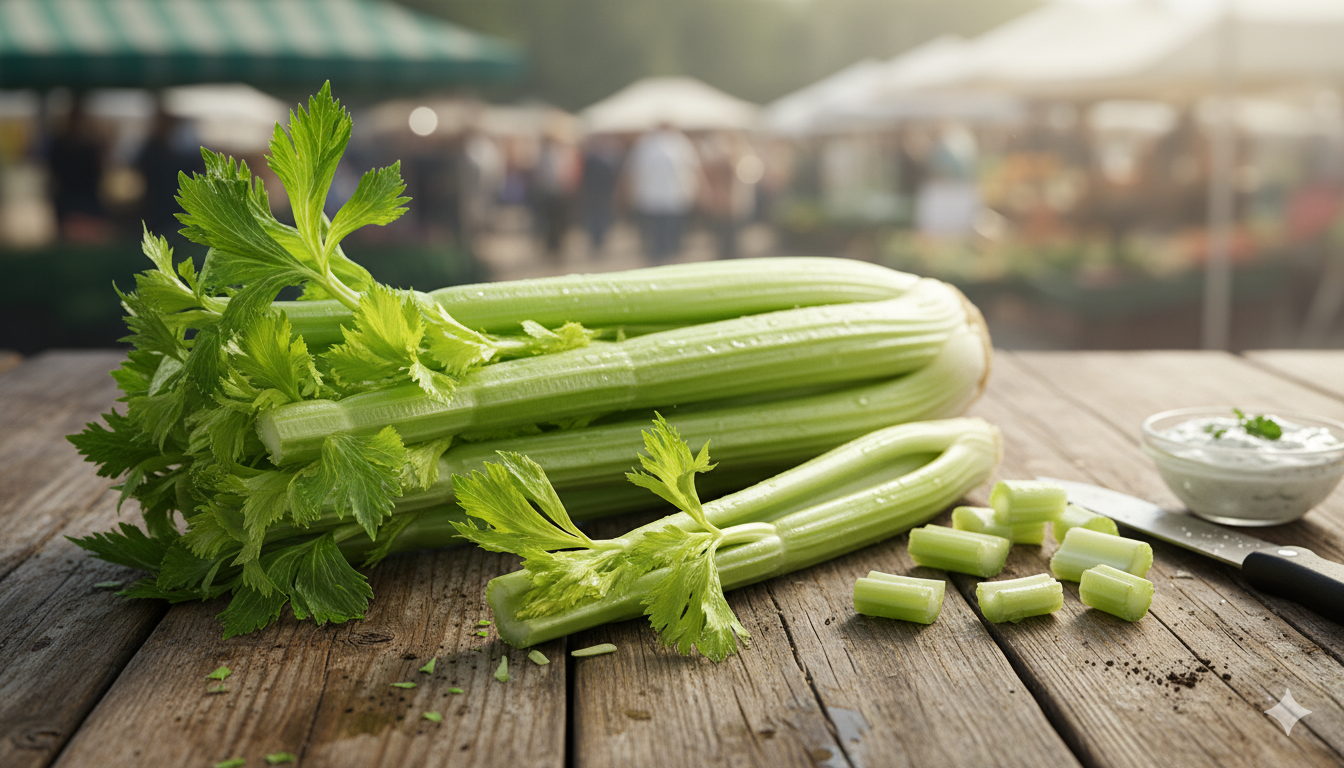
Have you ever bitten into a super crunchy celery stalk that snaps perfectly? That is Pravi Celer! This plant isn’t just a garnish for your soup; it is a true treasure chest of health straight from nature. Humans have been using it for thousands of years, dating back to the ancient Greeks and Romans. While they once viewed it as a symbol of luck or even sorrow, today we recognize it as the king of detoxification and healthy eating.
When we talk about Pravi Celer, we are referring to the plant known scientifically as Apium graveolens. It belongs to the Apiaceae family, the same family as carrots and parsley. What makes it stand out is its intense, refreshing aroma and distinct flavor. You can eat it raw, cooked, or drink it as a juice. Every part of this plant is useful—from the crunchy stalks to the potent seeds—and we are going to dive into why you need it in your kitchen.
Detailed Plant Biography: Pravi Celer
To better understand this botanical wonder, let’s look at its “personal ID” in the table below.
| Feature | Details |
| Scientific Name | Apium graveolens |
| Common Names | Garden celery, Wild celery, Smallage |
| Family | Apiaceae (Umbellifers) |
| Life Cycle | Biennial (Leaves in year one, seeds in year two) |
| Growth Height | 40 to 80 centimeters |
| Blooming Time | July to September |
| Origin | Mediterranean and marshy areas of Europe |
| Main Varieties | Celeriac (root), Leaf celery, and Stalk celery (Pascal) |
The Fascinating History and Origins
Believe it or not, Pravi Celer wasn’t always a snack. Ancient Egyptians used it to make floral garlands to decorate the tombs of kings. Later, the Greeks gave bouquets of celery to winners of athletic games instead of gold medals. It wasn’t until around the 16th century that Italians realized it was actually delicious and began cultivating it as a vegetable rather than just a medicine or decoration.
Today, real celery is grown all over the world. It evolved from a wild, bitter plant that grew near the sea into the crisp, mild food we know today. Its journey from a symbol of ancient rituals to a modern fitness icon is truly fascinating. Every time you add it to your salad, remember you are eating a plant with a history spanning several millennia.
Different Varieties You Might Encounter
There are three main types that make up the family we call Pravi Celer. First is celeriac, which has a large, bulbous root. It is fantastic for creamy soups and mashes. Second is stalk celery (or ribbed celery), featuring those long green stalks perfect for dipping. The third is leaf celery, which looks a bit like parsley and is grown specifically for its aromatic leaves used as a herb.
All these types are technically Pravi Celer, just bred over time to emphasize different parts. Personally, I love stalk celery because it is so juicy and refreshing in summer smoothies. If you have a small garden, I highly recommend planting leaf celery. It grows very fast, and you will always have a fresh seasoning on hand for your favorite stews.
How to Grow Pravi Celer in Your Own Garden
Growing a plant like Pravi Celer can be a small challenge, but the reward is worth the effort. This plant loves lots of water and very rich soil. It is best to start with seedlings in the spring. Celery is a “thirsty” plant, so you should never let the soil dry out completely. If it gets too dry, the stalks will become tough and bitter, which nobody wants!
Furthermore, Pravi Celer is a heavy feeder. This means it needs plenty of fertilizer or compost. I have noticed it grows best when you add some aged manure to the soil in the autumn. If you live in an apartment, you can try growing it in a deep pot on a balcony. Just give it enough sun and consistent watering, and watch your little green oasis thrive.
Healing Properties: Why is it Good for Us?
Scientists say that Pravi Celer is like a tiny natural pharmacy. It contains compounds called phthalides that help relax the muscles around blood vessels, which can help lower blood pressure. It is also a natural diuretic, meaning it helps the body flush out excess water and toxins. Many people drink celery juice on an empty stomach to jumpstart their digestion and clear their skin.
Beyond detoxing, Pravi Celer is packed with Vitamin K and Vitamin C. Vitamin K is essential for bone health, while Vitamin C keeps our immune system strong. Interestingly, celery keeps most of its nutrients even when cooked for a short time. So, feel free to toss it into every pot! I often use it as a natural anti-inflammatory to keep my joints feeling flexible.
Nutritional Value and Weight Loss
If you are looking to shed a few pounds, Pravi Celer is your best friend. It is incredibly low in calories—one stalk has only about 6 calories! Since it is 95% water, it keeps you hydrated. Because of the fiber it contains, you will feel full for longer, which stops you from reaching for unhealthy snacks between meals.
There is a common myth that Pravi Celer is a “negative calorie” food. While that isn’t scientifically perfect, your body does burn a lot of energy just chewing and digesting it. This makes it an ideal food for any diet. Instead of reaching for chips, grab some celery sticks and dip them in hummus—your body will thank you for the switch.
Pravi Celer in the Kitchen: Tips and Tricks
In the kitchen, Pravi Celer is a true multitasker. The root adds depth to stocks, while the leaves can replace parsley for a bolder flavor. Stalks are fantastic in salads because they provide that necessary crunch. Here is a little trick: if your celery gets a bit “floppy” in the fridge, put it in a glass of cold water for an hour. It will soak up the moisture and become crisp again!
Also, Pravi Celer pairs perfectly with apples and walnuts. This is the classic combination for the famous Waldorf salad. I like to add finely chopped celery to my Bolognese sauce—it provides a subtle sweetness and a great texture. Experiment a bit, and you will see how many different “personalities” this simple plant can have in your cooking.
How to Choose and Store Your Celery
When buying Pravi Celer at the store or market, look at the color. It should be a bright, pale green and feel very firm. If the leaves are yellow or brown, it is no longer fresh. The stalks should not be bendy; if you try to bend them slightly, they should snap. This snap is a sign that they are full of juice and nutrients.
To keep your Pravi Celer fresh for as long as possible, wrap it tightly in aluminum foil and put it in the vegetable drawer of your fridge. The foil allows ethylene gas (which causes spoilage) to escape while keeping the moisture in. It can stay fresh for up to two weeks this way. Don’t wash it until you are ready to use it, as moisture on the leaves can lead to mold.
Fun Facts You Might Not Know
Here is a wild fact: in some ancient cultures, Pravi Celer was actually considered an aphrodisiac! People believed it gave them extra strength and energy. Another cool thing is that celery contains natural sodium. This means food cooked with plenty of celery doesn’t need as much added salt. This is great news for anyone watching their salt intake but still wanting tasty meals.
While Pravi Celer is super healthy, some people can be allergic to it. In fact, in Europe, it is one of the more common food allergies. Also, bees absolutely love it! When celery goes to seed and blooms, its white flowers attract hundreds of bees. The Latin name Apium actually comes from the word for bee, showing how important it is for our ecosystem.
Frequently Asked Questions (FAQ)
1. Can I eat Pravi Celer every day?
Yes, most people can enjoy celery every day. It is great for hydration and digestion. However, if you have kidney issues, talk to a doctor first because it contains a fair amount of potassium and sodium.
2. Is it better raw or cooked?
Raw Pravi Celer has the most Vitamin C, but cooked celery is often easier on the stomach for people with sensitive digestion. It is best to eat it both ways to get the full range of benefits.
3. How do I tell Pravi Celer apart from wild celery?
Garden or “real” celery has thicker, juicier stalks that are not bitter. Wild celery is usually much smaller, grows in very wet marshy areas, and has a very strong, bitter taste that isn’t pleasant to eat.
4. Why is Pravi Celer juice so popular?
It became a hit because many believe it cleanses the liver and clears up skin conditions. While it isn’t a “magic cure,” it is a very nutrient-dense way to start the day compared to sugary drinks.
5. Can pregnant women eat celery?
In normal food amounts, it is perfectly safe. However, pregnant women should avoid medicinal amounts of celery seeds or extracts, as they can sometimes stimulate the uterus.
6. Can I freeze Pravi Celer?
Yes! It is best to chop it into cubes and blanch it in boiling water for 3 minutes before freezing. This helps it keep its color and flavor for use in winter soups and stews.
Conclusion: Time to Make Pravi Celer a Habit!
After everything we’ve learned, it’s clear that Pravi Celer is much more than a boring veggie. It is a historical plant, a natural medicine, and a weight-loss hero. Whether you grow it in your backyard or pick it up at the farmer’s market, it brings freshness and health into your home. Its versatility in the kitchen lets you get creative, and your body will certainly thank you for the extra nutrients.
I encourage you to try a new recipe with this plant today. Maybe a refreshing green juice or a crunchy salad? Whatever you choose, you can’t go wrong. Pravi Celer truly deserves a permanent spot on your plate. Have you ever tried regrowing celery from a leftover base? It’s a fun kitchen experiment!