







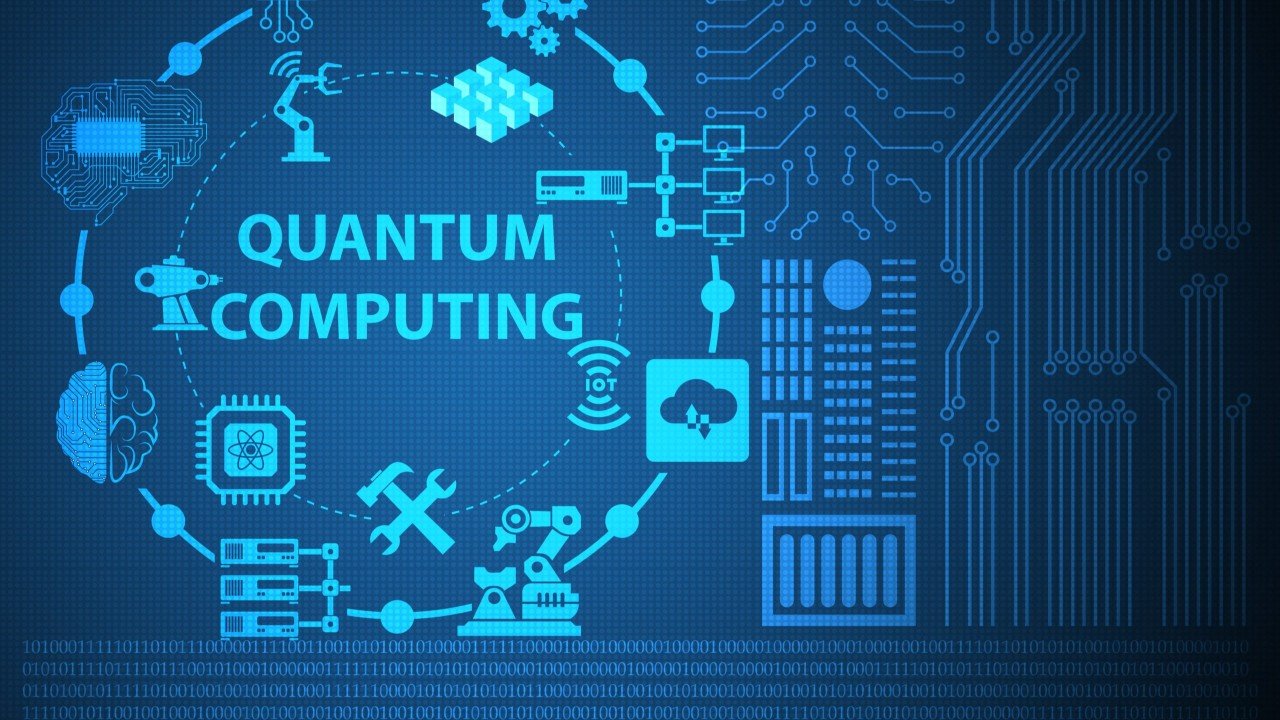
Quantum computing represents a transformative frontier in modern technology, promising to redefine how we process information and solve complex problems. Unlike classical computers, which rely on bits to represent information as either 0 or 1, quantum computers leverage the principles of quantum mechanics, using quantum bits, or qubits, that can exist in multiple states simultaneously. This unique property, known as superposition, allows quantum systems to perform many calculations at once, exponentially increasing computational power for certain tasks. In essence, quantum computing introduces a paradigm shift from linear, sequential processing to parallel, multidimensional computation.
Understanding Qubits and Quantum Principles
At the core of quantum computing lies the qubit, which serves as the fundamental unit of quantum information. While classical bits are binary and deterministic, qubits are probabilistic, able to represent 0, 1, or both simultaneously. This ability stems from quantum superposition, a phenomenon where a particle can exist in multiple states at once until measured. Entanglement, another key principle, allows qubits to be interconnected so that the state of one qubit can instantly influence the state of another, regardless of the distance separating them. These principles collectively provide quantum computers with unparalleled computational capabilities, particularly in solving problems that are intractable for classical systems.
Physical Realizations of Qubits
The physical realization of qubits has been a significant challenge for researchers. Various approaches have emerged, each with distinct advantages and limitations. Superconducting qubits, which utilize circuits cooled to near absolute zero to minimize electrical resistance, are among the most widely studied. Ion trap qubits, on the other hand, employ electromagnetic fields to trap and manipulate ions with extraordinary precision. Topological qubits, though still largely experimental, aim to exploit exotic quantum states for greater stability and error resistance. Each of these technologies reflects the intricate balance between maintaining qubit coherence and enabling scalable quantum computation.
Applications in Cryptography
Quantum computing holds tremendous promise across a range of applications. One of the most anticipated areas is cryptography. Classical encryption methods, such as RSA, rely on the difficulty of factoring large numbers, a task that is computationally expensive for conventional computers. Quantum computers, however, could efficiently solve such problems using algorithms like Shor’s algorithm, potentially rendering current encryption standards obsolete. This prospect has triggered a wave of research into post-quantum cryptography, which seeks to develop cryptographic methods resistant to quantum attacks. The implications of this are profound, influencing data security, national defense, and the integrity of digital communication.
Impact on Optimization, Materials Science, and Pharmaceuticals
Beyond cryptography, quantum computing offers transformative potential in fields such as optimization, materials science, and pharmaceuticals. Optimization problems, which involve finding the best solution from a vast number of possibilities, are notoriously difficult for classical computers. Quantum algorithms can explore these possibilities in parallel, offering solutions to complex logistical challenges in industries ranging from transportation to supply chain management. In materials science, quantum simulations can accurately model the behavior of molecules and chemical reactions at an atomic level, enabling the discovery of new materials with desired properties. Similarly, in drug discovery, quantum computing can simulate molecular interactions with unprecedented precision, accelerating the development of novel therapeutics and reducing the cost and time associated with traditional experimental approaches.
Challenges in Quantum Computing
Despite these promising applications, the path to practical quantum computing is fraught with challenges. Qubits are highly sensitive to environmental noise and interference, leading to errors in computation. Maintaining qubit coherence—the ability of a qubit to retain its quantum state over time—is a central technical hurdle. Error correction in quantum computing is fundamentally different from classical error correction, requiring intricate schemes that encode logical qubits across multiple physical qubits. Additionally, building a scalable quantum computer demands sophisticated control systems and cryogenic infrastructure, all of which contribute to significant technical and financial barriers. These challenges have led experts to temper expectations, emphasizing that while the potential is enormous, fully functional, fault-tolerant quantum computers remain a work in progress.
Milestones in Quantum Computing Development
The evolution of quantum computing has been marked by milestones that demonstrate both progress and potential. Early experiments in the 1980s and 1990s established the theoretical foundations and demonstrated rudimentary quantum logic operations. The first small-scale quantum computers capable of performing simple algorithms appeared in the early 2000s. More recently, advancements by companies such as IBM, Google, and Rigetti have achieved significant breakthroughs in building multi-qubit processors and demonstrating quantum supremacy—the point at which a quantum computer performs a calculation beyond the practical capabilities of classical computers. These milestones highlight a trajectory of rapid innovation, driven by both academic research and industrial investment, underscoring the growing recognition of quantum computing as a critical area for technological advancement.
Societal Implications
The societal implications of quantum computing are vast and complex. On one hand, the ability to solve previously intractable problems could lead to breakthroughs in science, medicine, and engineering, fundamentally enhancing human knowledge and capability. On the other hand, the disruptive power of quantum computing raises ethical and security concerns. For instance, the potential to break current encryption systems poses significant risks to privacy, financial systems, and national security. There is also a broader philosophical dimension to consider: as quantum computers enable simulations of complex systems, they challenge conventional notions of determinism and prediction, forcing us to rethink the boundaries of computation and understanding.
Education and Workforce Development
Education and workforce development are critical components in the quantum computing landscape. Developing and deploying quantum technology requires expertise in quantum physics, computer science, mathematics, and engineering. Universities and research institutions worldwide are establishing specialized programs to train a new generation of quantum scientists and engineers. In parallel, technology companies are offering online courses, workshops, and certification programs to upskill professionals, ensuring that the emerging workforce is prepared to meet the demands of this rapidly evolving field. This focus on education reflects the recognition that technological advancement is inseparable from human capital development, and that a robust talent pipeline is essential for sustaining innovation.
Global Investments in Quantum Research
In addition to scientific and industrial efforts, governments around the world are investing heavily in quantum research. National quantum initiatives in countries such as the United States, China, and members of the European Union aim to establish strategic leadership in this transformative technology. These initiatives typically focus on funding basic research, supporting startup companies, building national quantum infrastructure, and fostering international collaboration. The global nature of quantum computing underscores its strategic importance, with nations recognizing that leadership in this field could confer significant economic, technological, and security advantages in the coming decades.
Near-Term Applications and Quantum-Inspired Computing
While full-scale, fault-tolerant quantum computers are not yet a reality, the field is already yielding practical insights through hybrid approaches that combine classical and quantum processing. Quantum-inspired algorithms and near-term quantum devices, often referred to as Noisy Intermediate-Scale Quantum (NISQ) devices, offer tangible benefits even before the arrival of large-scale quantum machines. These systems allow researchers and businesses to explore quantum-enhanced solutions, test algorithms, and develop a practical understanding of quantum behavior in real-world contexts. The iterative progress of NISQ technology represents a bridge between theoretical promise and applied impact, providing a glimpse of the transformative potential of quantum computing in the near term.
Cultural and Intellectual Impact
The cultural and intellectual impact of quantum computing extends beyond practical applications. Quantum concepts challenge our understanding of reality, causality, and computation itself. The counterintuitive nature of superposition and entanglement sparks philosophical debate and inspires creative thinking in fields ranging from philosophy to art. Popular science literature, media, and educational content increasingly explore quantum ideas, fostering public engagement and curiosity about the fundamental nature of the universe. In this way, quantum computing is not just a technological endeavor but a catalyst for intellectual exploration, encouraging society to grapple with profound questions about the limits of knowledge and the nature of computation.
Conclusion
Looking ahead, the trajectory of quantum computing suggests a future where its influence permeates multiple dimensions of society. Breakthroughs in qubit stability, error correction, and scalable architectures are likely to unlock new capabilities that reshape industries and redefine computational limits. As the technology matures, it may drive a new wave of innovation, enhance scientific understanding, and transform the way humanity approaches complex challenges. Quantum computing represents not only a revolution in computation but also a profound evolution in human understanding, offering opportunities and challenges that will shape the 21st century and beyond.