



Water has been used for comfort, recovery, and physical support for centuries. Today, it is still widely used in both clinical care and home wellness. Some people use warm water to relax stiff muscles. Some use pool-based exercise to support movement with less joint stress. Others use targeted water pressure or temperature changes as part of a recovery routine. These different methods are often grouped under one broad idea: hydrotherapy treatment.
Hydrotherapy treatment does not mean one single method. It refers to a range of water-based approaches that may support relaxation, mobility, low-impact exercise, and symptom relief. Some methods are simple and easy to do at home. Others are more structured and may take place in rehabilitation, therapy, or wellness settings.
Among the most common options are baths, pools, jets, and contrast therapy. Each one works in a different way. Each also fits different needs and goals. Understanding these options can help explain why hydrotherapy remains so widely used.
What Hydrotherapy Treatment Means
Hydrotherapy treatment is the therapeutic use of water to support the body. This can involve water temperature, water pressure, buoyancy, resistance, or a combination of these effects. Some forms are active, which means the person moves or exercises in water. Other forms are passive, which means the person rests, soaks, or receives water-based stimulation without much movement.
This wide scope is what makes hydrotherapy so flexible. A person recovering from limited mobility may use water very differently from someone who wants to relax after a long day. One may need guided exercise in a therapy pool. Another may simply use a warm bath at home.
Still, all of these methods rely on the same basic idea. Water changes how the body feels and moves. That is what gives hydrotherapy its practical value.
Why Water Can Be Therapeutic
Water has several qualities that make it useful for therapeutic purposes.
First, it supports body weight. This is known as buoyancy. When a person is partly submerged, the body feels lighter. This may reduce stress on joints and make movement feel easier.
Second, water creates resistance. Moving through it takes effort. This can support gentle strength and endurance work without the same impact found in many land-based exercises.
Third, water surrounds the body with even pressure. This can create a feeling of support and help make movement feel more stable.
Fourth, water temperature can affect comfort. Warm water is often linked with relaxation and easier movement. Cold water is often used in short recovery routines. Alternating temperatures can create another type of therapeutic effect.
These simple properties explain why there are so many hydrotherapy treatment options.
Warm Baths
Warm baths are one of the most familiar and accessible forms of hydrotherapy. They require little equipment and can be done at home. For many people, this is the easiest place to begin.
A warm bath is often chosen for relaxation, comfort, and gentle relief from muscular tension. It may also help stiff movement feel easier for a short time. That is why warm baths are commonly used at the end of the day or after physical activity.
The benefit of this method is its simplicity. It does not require advanced planning. It can fit into a normal home routine. It is also easy to adjust. A person can control the temperature, the duration, and the environment.
Warm baths are usually considered a passive form of hydrotherapy. The person is not working against resistance or doing exercise. The focus is rest, comfort, and calm. Even so, this simple method is a major part of hydrotherapy treatment because it is practical and widely used.
Therapy Pools
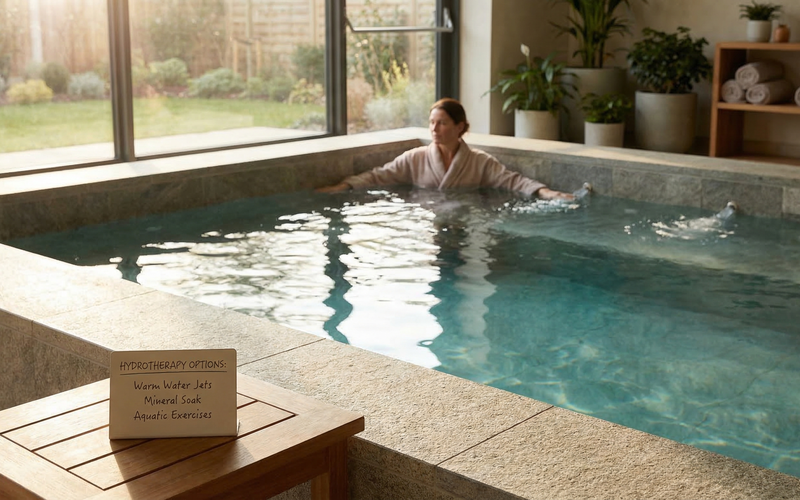
Pools offer a different kind of hydrotherapy experience. Unlike a bath, a pool allows movement, walking, stretching, and exercise. This makes it especially useful for low-impact activity and rehabilitation.
In a pool, the body benefits from buoyancy. This may reduce loading on the knees, hips, back, and other weight-bearing areas. For people who find land-based movement difficult, pool activity may feel more manageable.
Pools are often used in several ways. Some people use them for general aquatic exercise. Others use them for structured rehabilitation under supervision. Some use them for mobility practice, balance work, or gradual strength building.
Because water provides resistance in all directions, even simple movements can become useful exercise. Walking through water, lifting the arms, or stepping side to side can challenge the body without the same hard impact that some land exercises create.
Another advantage of pools is flexibility. A session can be gentle or more demanding depending on the person’s needs. This makes pools one of the most adaptable hydrotherapy treatment options available.
Water Jets
Jet-based hydrotherapy uses directed streams of water to apply pressure to parts of the body. This method is often used for a massage-like effect or for localized comfort. It may be found in wellness settings, therapeutic environments, and certain rehabilitation spaces.
Unlike a simple soak, jets add motion and pressure. The water stream can be focused on areas such as the back, shoulders, legs, or feet. This creates a different sensation from still water immersion.
Some people choose water jets because they enjoy the feeling of targeted water pressure. Others use them as part of a broader relaxation or recovery routine. In some settings, jets may be included alongside warm water immersion so that the person benefits from both heat and mechanical stimulation at the same time.
Jet therapy is often viewed as a passive option. The person usually remains still while the water acts on the body. Even so, it can play a useful role in hydrotherapy treatment because it provides a more focused experience than soaking alone.
Contrast Therapy
Contrast therapy involves alternating between warm and cold water. This can be done with baths, showers, tubs, or localized applications. The exact method may vary, but the central idea is the same: the body is exposed to changing temperatures in a controlled way.
This is one of the more distinctive hydrotherapy options because it uses temperature contrast rather than relying only on warmth or water support. Some people use contrast therapy after exercise. Others use it as part of a short home recovery routine.
Warm water is often linked with relaxation and ease of movement. Cold water is often associated with short-term recovery and a refreshing effect. By switching between the two, contrast therapy creates a very different experience from a steady warm soak.
This method tends to be more structured than a simple bath. It usually involves shorter intervals and more attention to timing. Because of that, it may feel less casual than other options. Some people enjoy the routine. Others prefer a simpler approach.
Choosing Between Baths, Pools, Jets, and Contrast Therapy
The best option depends on the person’s goal.
If the main goal is relaxation, a warm bath may be the most practical choice. It is simple, accessible, and easy to repeat.
If the goal is low-impact exercise or rehabilitation, a pool is often the strongest option. It supports movement while reducing stress on the joints.
If the goal is localized pressure and a massage-like sensation, water jets may be the most appealing method.
If the goal is a more dynamic temperature-based recovery routine, contrast therapy may be worth considering.
These options are not always separate. Some people combine them. For example, a person may use warm water immersion with jets. Another may alternate pool-based movement with simple warm baths at home. The methods can overlap depending on the setting.
Active and Passive Hydrotherapy
It is also useful to think about hydrotherapy treatment in terms of active and passive methods.
Active methods involve movement. Pool walking, aquatic exercise, and guided rehabilitation are examples. These are often chosen when the goal is mobility, strength, endurance, or function.
Passive methods involve little or no movement. Warm baths, jet sessions, and some forms of contrast therapy fall into this category. These are often chosen for relaxation, recovery, or temporary comfort.
Neither category is better in every case. They simply serve different purposes. Some people need movement support. Others want quiet recovery. Many people use both at different times.
Home Use and Clinical Use
Another difference lies in where hydrotherapy takes place.
At home, warm baths and simple contrast routines are the most common. These approaches are easy to integrate into daily life. They are often used for comfort, relaxation, and short recovery sessions.
In clinical or rehabilitation settings, pools are more common. These settings may involve structured sessions, supervised exercise, and treatment plans tailored to a person’s condition or progress.
Jet-based systems can appear in both home and professional environments, depending on the setup. This makes them one of the more flexible options in terms of setting.
The location matters because it affects supervision, session structure, and the overall goal of the treatment.
Safety and Practical Considerations
Even though hydrotherapy can be simple, safety still matters. Water that is too hot can place stress on the body. Cold water may not suit every person. Long sessions are not always better. Temperature and timing should be approached with care.
People with certain health concerns should seek medical guidance before beginning a hydrotherapy routine. This includes those with unstable heart conditions, fever, open wounds, severe respiratory issues, or other problems that may affect safety in water.
It is also important to stop if symptoms such as dizziness, chest pain, shortness of breath, or new and worsening pain occur.
In practical terms, it helps to begin with moderate temperatures, short sessions, and a simple routine. Many people do best when they start gradually rather than trying every method at once.
Why These Treatment Options Remain Popular
Baths, pools, jets, and contrast therapy remain popular because they meet different needs without being overly complicated. They can be adapted for recovery, comfort, movement, or general wellness. They also allow people to choose a method that fits their space, schedule, and comfort level.
This is one of the strengths of hydrotherapy. It is not tied to one single format. It can be quiet and restorative. It can also be active and goal-based. That range makes it relevant to many people.
Final Thoughts
Hydrotherapy treatment includes a wide range of water-based options, but baths, pools, jets, and contrast therapy are among the most common. Each one offers a different experience. Warm baths focus on comfort and relaxation. Pools support movement and low-impact exercise. Jets provide targeted water pressure. Contrast therapy uses temperature changes as part of a structured recovery approach.
Because these methods work in different ways, they can support different goals. Some are better suited to home wellness. Others are more useful in rehabilitation or guided care. Together, they show why hydrotherapy remains such a flexible and practical approach for people seeking support through the therapeutic use of water.