




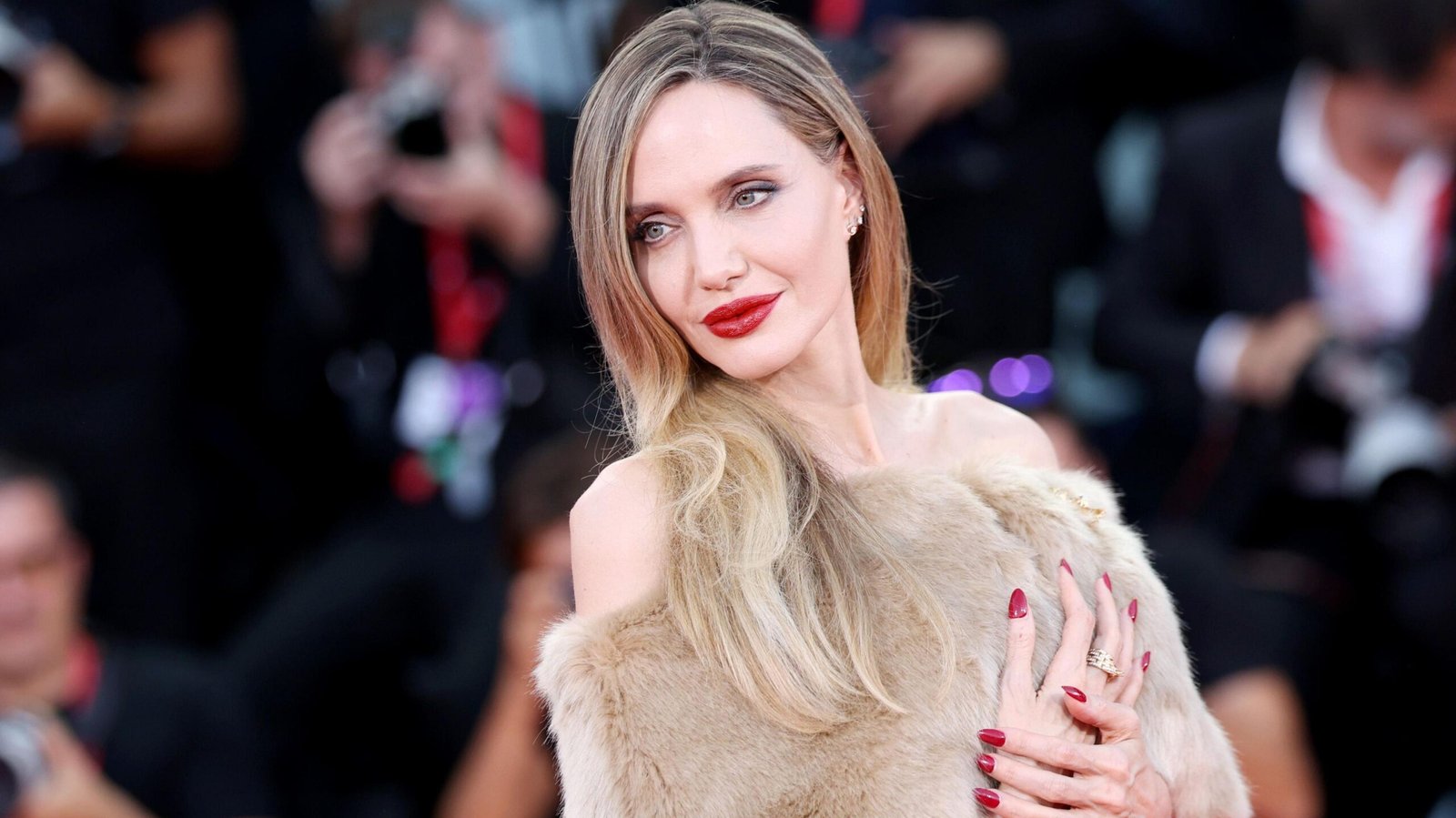
In the ever-evolving world of cinema, few performances manage to capture both the heart and history of their subjects with raw precision. When it comes to Angelina Jolie Maria, the buzz is not just about another biopic — it’s about the seamless merging of two powerful legends. Academy Award–winning actress Angelina Jolie steps into the shoes of Maria Callas, the most celebrated opera singer of the 20th century, in Pablo Larraín’s emotional and visually captivating film Maria. The result is a breathtaking portrayal that transcends imitation and becomes an intimate exploration of identity, loneliness, and the price of genius.
A Role That Redefines Angelina Jolie
Angelina Jolie has long been known for her magnetic presence — whether she’s wielding weapons in Tomb Raider, bringing empathy to Maleficent, or tackling humanitarian causes around the world. But in Maria, Jolie delivers something profoundly different: restraint, fragility, and an aching humanity that quietly unfolds with every scene.
Taking on the role of Maria Callas — the opera diva whose life was as dramatic as her performances — required more than just acting skill. It demanded a transformation, both physical and emotional. Jolie, who has often been associated with strength and confidence, embraced vulnerability to portray the final days of Callas’s life. Her dedication to detail — from the subtle Greek-Italian accent to the expressive use of hands reminiscent of Callas’s stage gestures — brings an authenticity that has captivated critics and audiences alike.
The Vision of Pablo Larraín
Maria marks the third installment in Pablo Larraín’s trilogy of films about iconic women, following Jackie (2016) and Spencer (2021). Known for his psychological storytelling and poetic realism, Larraín once again avoids the traditional biopic format. Instead, he crafts a deeply personal narrative — one that blurs memory, imagination, and isolation.
Set in Paris during the 1970s, the film captures the final moments of Callas’s reclusive life. Larraín allows the camera to linger — not on spectacle, but on silence. Through delicate cinematography and haunting set design, Maria becomes more of a confession than a chronicle. Jolie’s interpretation fits perfectly within this vision, delivering emotion through restraint rather than melodrama.
Transformation Through Costume and Voice
One of the most striking aspects of Angelina Jolie Maria is the attention to aesthetic detail. Every costume, designed from archival photographs and authentic vintage materials, mirrors Callas’s refined style. From silk gowns to her signature cat-eye glasses, the wardrobe becomes an extension of her character — elegance masking inner turmoil.
Jolie’s transformation was not limited to appearance. She studied Callas’s recordings extensively, internalizing her tone and cadence. While she does not sing in the film, her lip-syncing and emotional interpretation of iconic arias — from Tosca to La Traviata — carry the same emotional weight as a live performance. Her portrayal of Callas’s voice is more spiritual than literal, symbolizing the haunting echoes of a woman defined by her art.
Themes of Loneliness, Love, and Legacy
At its core, Maria is a meditation on solitude — the kind that comes after applause fades and fame becomes a memory. Angelina Jolie’s portrayal captures Callas not as a goddess, but as a woman torn between love and art. Her relationship with Greek shipping magnate Aristotle Onassis, famously overshadowed by his later marriage to Jackie Kennedy, remains one of history’s most public heartbreaks.
Through flashbacks and dreamlike sequences, the film explores how Callas’s passion for Onassis both fueled and fractured her spirit. Jolie’s eyes tell the story more eloquently than words ever could — pain, nostalgia, and a lingering sense of “what if.” It’s a reminder that even the most powerful women can be broken by love, and yet rise again through art.
Larraín and Jolie’s collaboration brings these emotional layers to life without glorifying tragedy. Instead, they celebrate resilience — the way Maria Callas continued to live through her music, long after her voice faltered.
Critical Reception and Public Response
Upon its premiere at the Venice Film Festival in 2024, Maria received a seven-minute standing ovation. Critics hailed Jolie’s performance as her best in years — a mesmerizing embodiment of grace and sorrow. Many compared her quiet intensity to Natalie Portman’s Jackie and Kristen Stewart’s Spencer, yet acknowledged that Jolie’s portrayal carried a maturity and self-awareness unique to her career stage.
Audiences, too, were drawn to the vulnerability behind the glamour. The film’s subdued tone resonated with viewers seeking something deeper than traditional biopic spectacle. Social media buzzed with praise for Jolie’s emotional authenticity, with fans calling it a “masterclass in transformation.”
While some reviewers noted that Maria may not appeal to those expecting grand operatic dramatics, most agreed that the film’s strength lies in its stillness. It’s a film that invites reflection rather than noise — a cinematic aria for those who listen closely.
Symbolism and Cinematic Craft
The artistry of Angelina Jolie Maria lies in its subtle symbolism. Every frame is carefully composed to echo Callas’s inner world. The dimly lit Paris apartment, filled with old photographs and opera costumes, becomes a metaphor for the remnants of fame. The recurring use of mirrors emphasizes duality — Maria the diva versus Maria the woman.
Edward Lachman’s cinematography deserves special mention. Known for his work on Carol and Far from Heaven, Lachman captures light as emotion. The film’s muted tones — ivory, sepia, and shadow — evoke the faded glamour of a bygone era. Combined with a gentle score by composer Sebastián Lelio, the result is a haunting, painterly experience that lingers long after the credits roll.
Angelina Jolie’s New Artistic Chapter
For Angelina Jolie, Maria marks more than a comeback — it’s a reinvention. After years of high-profile action roles and directing ventures, Jolie seems to have found a project that aligns deeply with her artistic philosophy. Like Callas, she has faced scrutiny, fame, and heartbreak in equal measure. That shared emotional landscape infuses her performance with authenticity that cannot be faked.
Jolie herself described the experience as “a profound spiritual connection,” noting that embodying Maria Callas gave her renewed appreciation for vulnerability and artistic honesty. It’s this sincerity that elevates Maria from a film into a reflection — not just of Callas’s life, but of every artist who sacrifices pieces of themselves for beauty.
A Legacy Reimagined
Maria is not just a film about an opera singer — it’s a cinematic elegy for every woman who has ever been misunderstood by history. Through Angelina Jolie Maria, a new generation is introduced to the timeless brilliance of Callas, not as a distant legend, but as a fragile human being whose passion shaped her destiny.
This reimagining also cements Jolie’s position as one of the most daring actresses of her time. By channeling Callas’s essence rather than imitating her, she redefines biographical storytelling for the modern era. The film stands as both a tribute and a mirror — showing us how art immortalizes pain, and how performance becomes truth.
Conclusion
In Angelina Jolie Maria, two worlds collide — Hollywood and opera, beauty and sorrow, reality and art. The film’s power lies not in spectacle, but in emotion: a reminder that true artistry transcends genre, fame, and even time. Jolie’s portrayal of Maria Callas isn’t just acting — it’s embodiment, empathy, and elegance woven into one unforgettable performance.
As audiences continue to rediscover Maria, it’s clear that this film will echo far beyond awards season. It’s a timeless meditation on the cost of greatness and the enduring strength of women who dare to live passionately. For lovers of cinema, music, and transformation, Angelina Jolie Maria stands as a masterpiece worth revisiting.
For more thoughtful takes on art, culture, and film, stay connected with 9xflix, where storytelling meets soul.